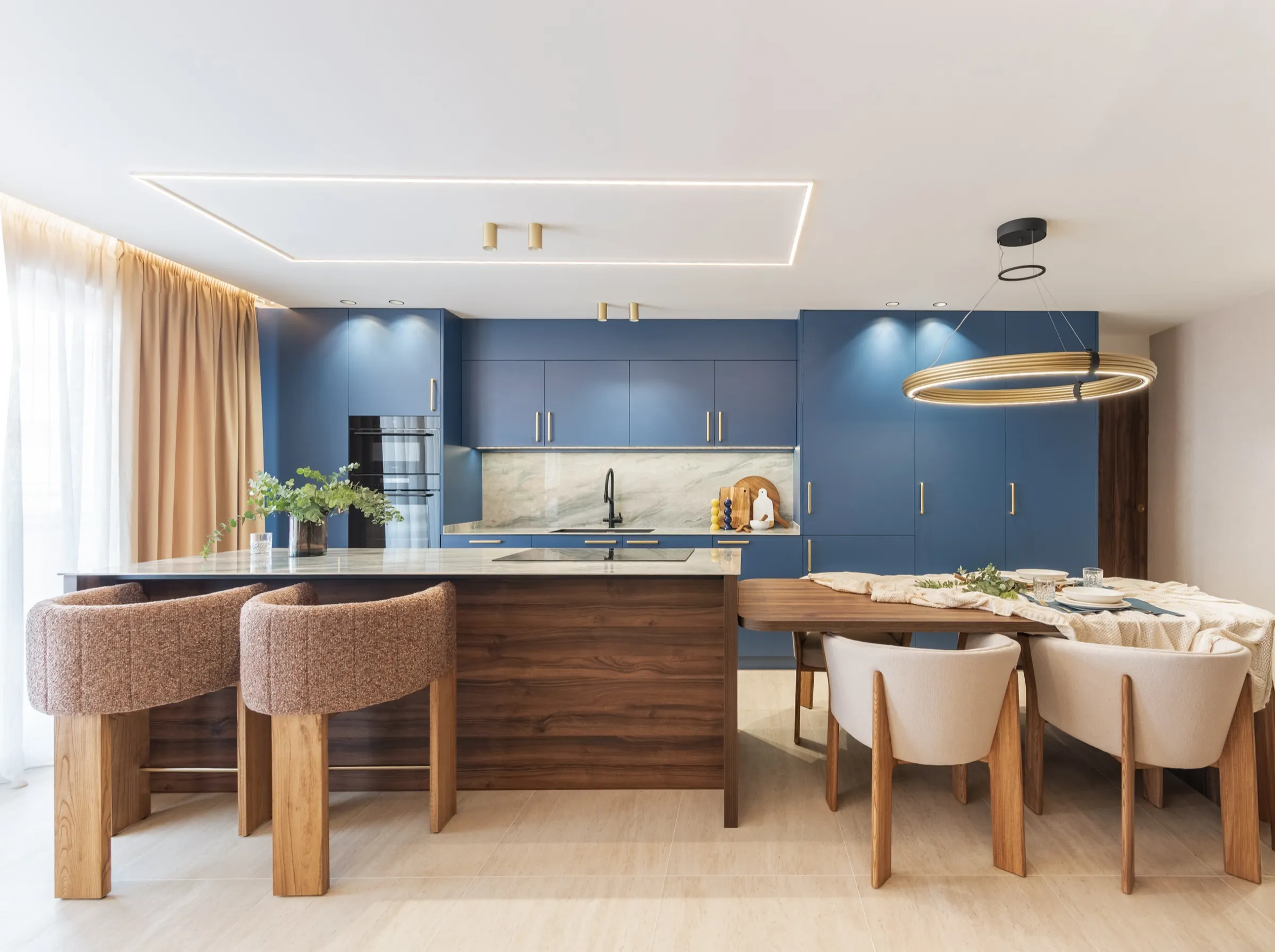
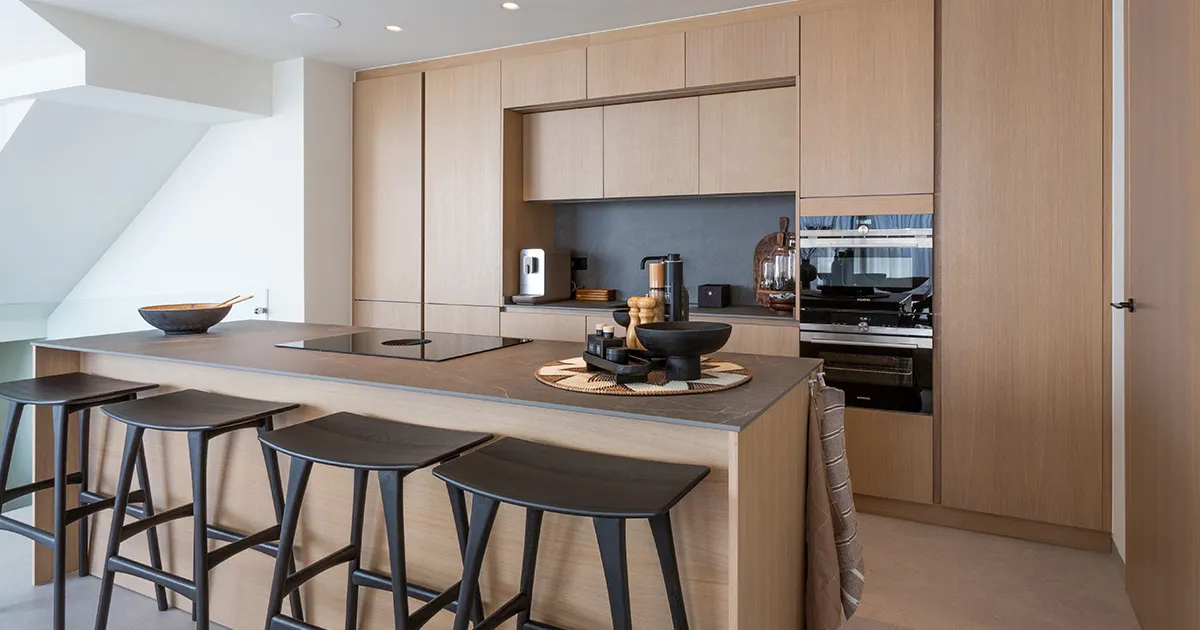
According to various surveys, most people identify the kitchen as the place where the most family memories are created. It is not just about cooking; it is a space where unexpected conversations, celebrations and routines that shape everyday life take place. That is why the island is sometimes referred to as the “heart of the home”.
It is difficult to think of a kitchen without an island as its central element —if the space allows for it—, a relatively recent addition to domestic design. The island has a history that reflects the social, architectural and functional changes within the home. Its emergence was not accidental. It has risen in prominence to such an extent that it is now considered a symbol of the modern home.
Origins of the kitchen island
Its origins can be traced back to the mid-19th century, when it served as a work table for food preparation, generally positioned close to the sink, refrigerator and cooking area. This table was designed to maximise efficiency while minimising unnecessary movement.
Frank Lloyd Wright was a pioneer in the evolution of the kitchen and the concept of open-plan layouts. Around 1930, he designed kitchens for clients who wanted to chat with their guests while cooking. This marked a departure from the traditional kitchen hidden from view and introduced the concept of the open-plan layout. As a result, the physical barriers between the kitchen and dining room disappeared or were significantly reduced in most homes.
When did it become popular in Spain?
Today, due to the popularity of the open-plan concept (Open plan), —and partly because of the exposure provided by social media—kitchens have evolved across every continent. In Spain, the island did not become widespread until approximately the 2000s, when renovations increasingly began to combine the living and dining room with the kitchen, a concept that had started appearing in many foreign television series.
Before then, homes typically had very small, enclosed kitchens, where the separation between rooms was essential and clearly defined.
The arrival of the island was driven by two main factors:
-
Architectural changes: new housing developments began to include larger, more open spaces, encouraging the integration of the kitchen into the social area of the home.
-
Cultural changes: the kitchen was increasingly valued as a space for socialising rather than simply as a work area. Families began spending more time in this room, sharing moments together and enjoying the process of cooking.
By 2010, the island had already become a desirable feature in a large proportion of homes and one of the key elements in any renovation project.
Why is the island so useful?
The island as the central element of almost every kitchen has remained popular for decades because it responds to several key needs:
-
Optimises space by providing a large surface for food preparation.
-
Increases storage capacity by incorporating drawers, shelves and dedicated modules.
-
Encourages social interaction, turning the kitchen into a place to share, talk and enjoy time together while cooking.
-
Adds strong aesthetic value, becoming the focal point of the design and allowing for combinations of materials, colours and textures.
Today, the kitchen is not just a workspace, but a place to live. And the island represents this evolution better than any other element.